
.BMeLfbH7_19j0xr.webp)
The Airport Lounge Is Broken. Here's How to Fix It.
You’ve cleared security, made it to the lounge, and every seat is taken. Someone nearby is on a loud speaker call. There’s nowhere private to open your laptop. The coffee is good, but so is the one at the gate, and at least there you’re not pretending it’s a premium experience.
The airport lounge was supposed to be different. It was the reason you booked the card, chose the airline, and paid for the upgrade. Somewhere along the way, it stopped being that.
How the Lounge Lost Its Soul
The numbers tell a damning story. According to Jeremy Dalkoff, VP of Partnerships and Travel Experiences at Collinson International, Priority Pass lounge visits increased 13% between January and September 2025 compared to the same period the previous year. Delta’s Sky Clubs have had travellers queueing outside terminals. Capital One introduced guest fees in February 2026, a direct response to wait times that, according to AFAR, had stretched to between 45 and 60 minutes at its Denver lounge during peak periods. American Express launched a reservation system. United restricted entry to a three-hour window before departure.
The cause is clear. As airlines and card issuers expanded access through credit card partnerships and loyalty programmes, footfall surged well beyond what most facilities were designed to handle. That’s not a criticism of those travellers; it’s a failure of infrastructure to keep pace with demand.
Industry analysts project the global airport lounge market will reach $16.2 billion by 2030. The investment is coming. But simply building bigger open-plan lounges replicates the same problem at greater scale.
The Real Issue Isn’t Space. It’s What Happens Inside It.
The frustration frequent travellers feel isn’t just about being turned away at the door. It’s about what they find when they get inside.
Noise. Exposure. No real privacy. The background stress of a busy, echoing room bleeding through whatever you’re trying to do. The lounge has become a nicer version of the gate, not an escape from it.
For the business traveller, this has real consequences. That earnings call taken quietly? You stepped outside instead. The proposal you needed an hour of focus to finish? Still half-written when you boarded. The decompression time between a brutal week of meetings and a seven-hour flight home? Gone.
The most forward-thinking operators are already responding. Wellness zones, dedicated workspaces, and sleep pods are the next wave of lounge investment, and what ties all of them together is a shift from open, ambient space to intentional, private space.
The Lounges That Will Win Are Building, Not Restricting
The lounges that reclaim genuine exclusivity won’t necessarily be the ones with the tightest door policies. They’ll be the ones where the experience inside feels unmistakably worth it, where a traveller steps in and immediately knows they’re somewhere different.
Routing travellers through a grab-and-go kiosk addresses volume. It doesn’t address the experience deficit for the road warrior who has three hours before their flight to Singapore, a client presentation to finalise, and a genuine need for somewhere quiet to think.
The operators who act now, while competitors are still debating access caps and visit limits, will be the ones who retain the most valuable, most loyal passengers.
Where Kabin Comes In
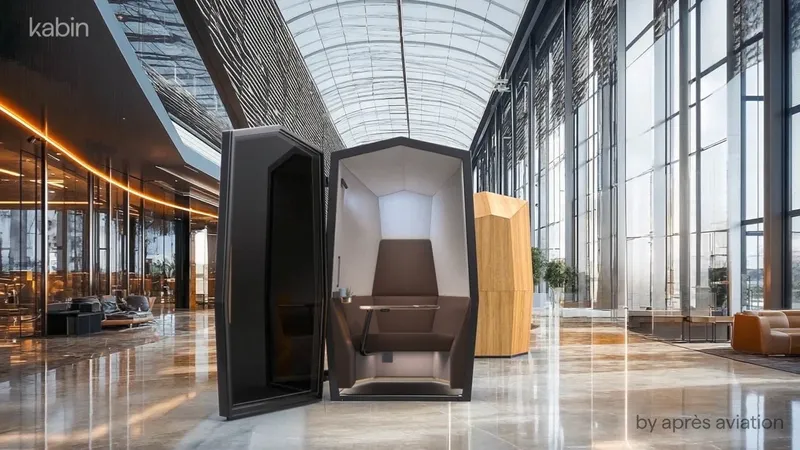
Kabin by Après Aviation is a premium private pod engineered specifically for high-traffic aviation environments. It addresses the overcrowding crisis not by reducing access, but by transforming the way space is used.
A standard open-plan lounge desk serves one traveller at a time, noisily, visibly, with the full ambient chaos of a busy room on all sides. Après Aviation’s Kabin pod delivers 29 dB of acoustic isolation, visual privacy, integrated mood lighting, and a Bluetooth-connected audio system: a self-contained environment that feels qualitatively different from anything else in the facility.
For the traveller, that means a genuine hour of focus before boarding. A confidential call at normal speaking volume. For the lounge operator, it means converting underperforming open floor space into a high-value, differentiated zone without expanding the building footprint.
The best frequent flyers know the difference between a lounge that looks premium and one that actually is. That difference isn’t the coffee or the furniture. It’s whether, when you walk in, you can actually do what you came to do: think, recover, work, breathe, without fighting the space around you.
The lounge isn’t broken beyond repair. It just needs better architecture.
Sources
- Jeremy Dalkoff (Collinson International), via The Manual, “Airport lounges are overcrowded – Experts predict tighter access and new designs by 2026”
- AFAR, “Capital One Has Changed Its Lounge Access Rules”